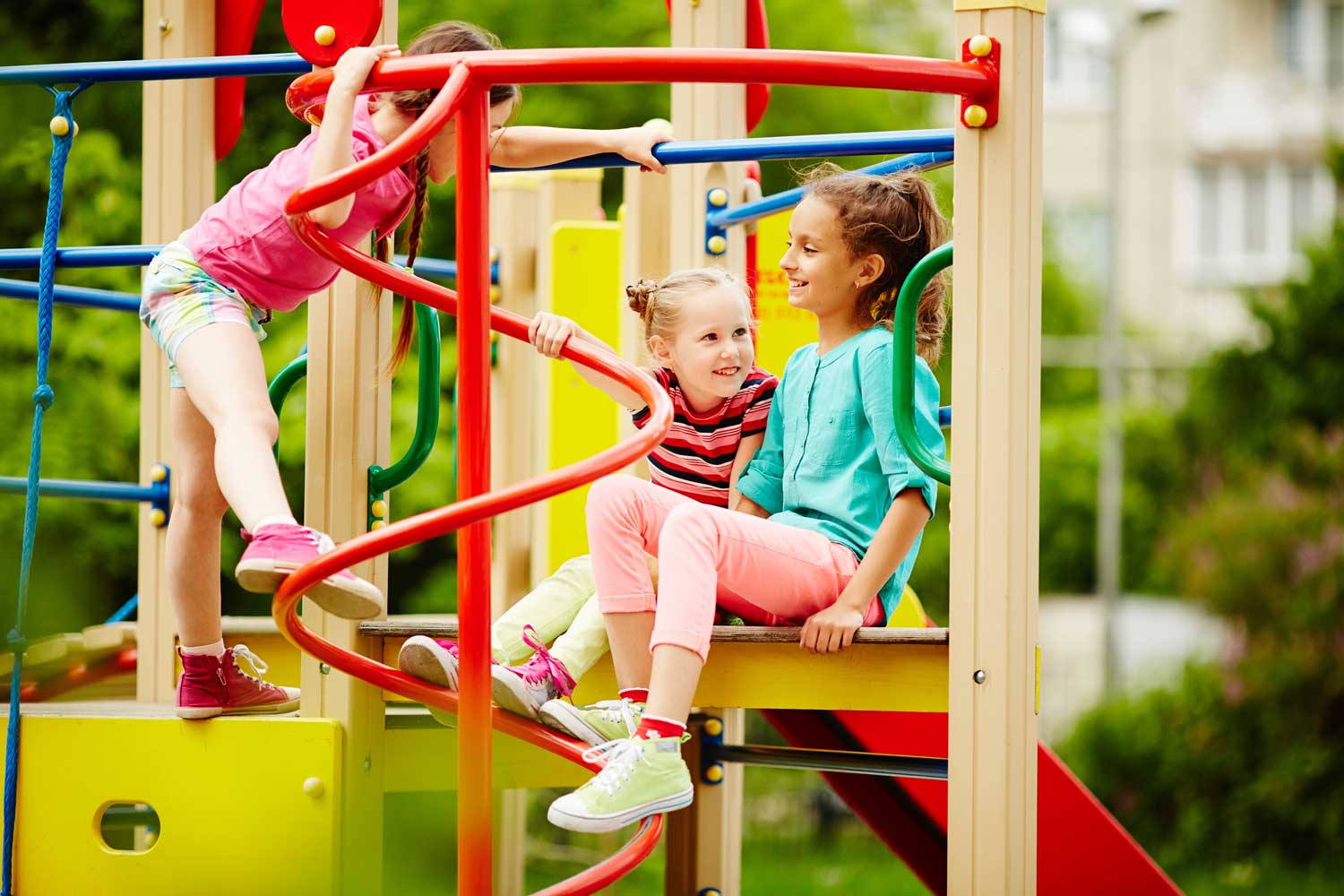
Children have always known something instinctively that researchers have spent decades confirming in laboratories: outside is different. The quality of attention out there, the quality of play, the quality of freedom — it's different from anything that happens inside a building. And that difference has profound, measurable consequences for how children develop.
Close your eyes for a moment and think about your best childhood memory. There’s a good chance it happened outside. A summer afternoon that stretched on forever. A backyard that felt like its own world. The specific weight of a stick that was perfect for something — you weren’t sure what. The particular smell of rain on hot pavement. The feeling of running as fast as you could just because you could, and no one was telling you to stop.
Today’s children spend less time outside than any previous generation in recorded history. They spend less time outside than incarcerated adults. Screen time has replaced exploration time. Structured activities have replaced unstructured play. Safety concerns — many of them statistically unfounded — have replaced the freedom that previous generations took for granted.
The consequences of this shift are showing up in children’s bodies, brains, emotional health, and academic performance in ways that researchers are increasingly alarmed by. And the solution is simpler and more accessible than almost any other intervention available to families and educators: get kids outside, and let them play.
Here’s what the science says — and how the Baby Genius Daycare program in Langhorne, PA makes outdoor play a non-negotiable part of every child’s day.
First: What We Mean by “Outdoor Play”
Before the research, a clarification worth making: outdoor play is not recess as many adults experienced it — a supervised, time-limited break between structured lessons where children are permitted to move for twenty minutes before returning to desks. And it’s not organized sport, which, however valuable, is adult-directed and outcome-focused in ways that limit its developmental benefits.
The outdoor play that research consistently identifies as developmentally essential is unstructured — child-directed, open-ended time in outdoor environments where children make the rules, choose the activity, manage the risk, navigate the social dynamics, and follow their own curiosity wherever it leads.
This might look like digging a hole. Building something with sticks and mud that has no name. Chasing a bug across a yard for twenty minutes. Inventing a game with rules that change every five minutes. Lying in grass and watching clouds. Running because running feels good and there’s room to run.
It looks, to the untrained eye, like nothing very important. It is, in fact, one of the most developmentally rich experiences available to a young child — and it’s increasingly scarce.
According to Zero to Three, play — particularly outdoor, self-directed play — is the primary vehicle through which young children develop cognitive flexibility, creativity, emotional regulation, physical competence, and social skills. It is not a break from learning. It is the most important form of learning available at this developmental stage.
Nature Deficit Disorder: What’s Happening to Children Who Stay Inside
In 2005, author and child advocate Richard Louv published Last Child in the Woods — a landmark work documenting the dramatic decline in children’s time in nature and coining the term “Nature Deficit Disorder” to describe the human cost of that disconnection. Louv’s work triggered a wave of research that has since documented, with increasing specificity, what happens to children when outdoor, nature-based play is removed from their lives.
The findings are consistent and concerning. Children with limited outdoor time show higher rates of anxiety, depression, attention difficulties, and behavioral problems than peers with regular outdoor access. They show reduced creativity, lower physical fitness, weaker gross motor skills, higher rates of obesity, and greater difficulty with the kind of open-ended thinking that academic success increasingly demands.
Conversely, children with regular, substantial outdoor time — even in modest natural environments — show measurably better outcomes across virtually every developmental dimension researchers have measured. The dose required is not heroic: even thirty to sixty minutes of daily outdoor time produces significant benefits. The problem is that for millions of children in modern childcare and school settings, even that modest threshold is not being met.
This is why, at Baby Genius Daycare, outdoor time is not scheduled if there’s time left over. It is scheduled first — and protected.
Seven Things Outdoor Play Develops That Indoor Environments Simply Can’t
1. Gross Motor Skills and Physical Competence
Running, jumping, climbing, balancing, throwing, catching, digging, rolling — these are not recreational activities. They are the developmental curriculum of the body, building the muscular strength, coordination, balance, and proprioceptive awareness that underpin everything from handwriting to athletic ability to the postural control required for sustained seated attention in a classroom.
The American Academy of Pediatrics identifies gross motor development as one of the foundational developmental achievements of the early childhood years — and notes that outdoor play is the primary environment in which it occurs. Children who climb on uneven surfaces develop balance and core strength that flat-floor indoor environments cannot produce. Children who run on real ground, over varied terrain, develop proprioceptive skills that treadmills and gym equipment cannot replicate.
The CDC recommends that children ages 3–5 be physically active throughout the day — not for sixty minutes, throughout the day — and that school-age children get at least 60 minutes of moderate-to-vigorous physical activity daily. In most indoor-heavy childcare and school environments, these guidelines are not being met. Outdoor play is the most natural and effective way to meet them.
2. Risk Assessment and Resilience
Outdoor environments are inherently more complex and unpredictable than indoor ones — and that complexity is developmentally valuable. The slight incline that requires balance. The tree branch that might or might not hold. The puddle of uncertain depth. The peer whose behavior is genuinely hard to predict. These micro-challenges are the gymnasium of risk assessment — the practice field for the judgment, courage, and resilience that real life will eventually demand.
Research is increasingly clear that eliminating risk from children’s play environments doesn’t make children safer — it makes them less capable of assessing and managing risk when they inevitably encounter it. Children who are allowed to take age-appropriate physical risks outdoors develop better judgment, greater confidence, and stronger resilience than children raised in over-protected indoor environments. They also have fewer serious injuries over time — because their bodies and brains have learned how to navigate challenge.
At Baby Genius Daycare, our outdoor space is designed to be safe — fully fenced, maintained, and actively supervised — while still offering children real opportunities to move, climb, run, and engage with the kind of graduated physical challenge that builds genuine competence. Our Health & Safety protocols ensure that outdoor time is both rich and appropriately managed.
3. Executive Function and Attention
Some of the most striking research on outdoor play concerns its effects on attention and executive function — the cognitive capacities that govern focus, impulse control, working memory, and flexible thinking. Harvard’s Center on the Developing Child identifies executive function as the most important cognitive achievement of the early childhood years — and unstructured outdoor play as one of its primary developmental drivers.
The mechanism appears to involve what researchers call “attention restoration.” Indoor environments — particularly structured ones — require sustained, directed attention that is cognitively demanding and depleting. Natural outdoor environments engage what researchers call “fascination” — a softer, more restorative form of attention that replenishes rather than depletes cognitive resources. Children who play outside regularly show stronger sustained attention, better impulse control, and greater cognitive flexibility than peers who spend comparable time in indoor, screen-based environments.
The implications for learning are direct. Children who get outdoor time during the school day — or at daycare — return to indoor learning tasks more focused, more regulated, and more capable of sustained effort than children who don’t. Outdoor time doesn’t compete with learning time. It makes learning time more effective.
4. Creativity and Imagination
Outdoor environments are, in the most literal sense, less finished than indoor ones. A classroom is designed. A backyard or playground is open. A stick is not a toy — which means a child who picks up a stick must decide what it is. A sword, a wand, a fishing rod, a microphone, a magic key. That decision — that act of transforming an object through imagination — is one of the foundational exercises of creative thinking.
Nature, in particular, offers an inexhaustible supply of these raw, unfinished materials: rocks, sticks, water, sand, leaves, mud, insects, shadows, wind. Children who play regularly in nature environments develop measurably stronger divergent thinking — the ability to generate multiple possible solutions to an open-ended problem — than children whose play environments are pre-defined and structured.
This creative capacity, built through years of outdoor play in childhood, is not a luxury. It is the cognitive foundation of innovation, problem-solving, and adaptability — the qualities that employers and researchers consistently identify as the most valuable capacities for success in a rapidly changing world.
5. Emotional Regulation and Mental Health
The relationship between nature exposure and mental health is one of the most robustly replicated findings in environmental psychology. Time in green, outdoor spaces reduces cortisol levels — the primary stress hormone — in children and adults. It lowers heart rate and blood pressure. It reduces symptoms of anxiety and depression. It improves mood, increases feelings of calm, and buffers the emotional effects of daily stressors.
For young children, who are in the active process of developing emotional regulation, these effects are particularly significant. A child who has spent an hour outdoors — running, exploring, breathing fresh air, experiencing the particular quality of light and space that only outside provides — is measurably calmer, more regulated, and more emotionally available for the social and academic demands of the rest of the day than a child who has spent that same hour indoors.
Our article on Raising Emotionally Intelligent Kids explores in depth how Baby Genius builds emotional regulation throughout the day — and outdoor play is one of the most powerful tools in that effort.
6. Social Skills and Conflict Navigation
Outdoor play environments create social situations that indoor ones rarely produce — situations where children must negotiate, cooperate, compete, lead, follow, include, and exclude without adult scripting. The invention of a game requires negotiation. A shared building project requires cooperation. A disagreement over whose turn it is requires conflict resolution. A child on the margins who wants to join requires someone to choose inclusion.
These social dynamics — messy, real, and sometimes uncomfortable — are the richest social-emotional learning environment available to a young child. Teachers who are present and supportive but not directive allow these situations to unfold and provide guidance when genuinely needed. Children who navigate these dynamics repeatedly, across hundreds of outdoor play sessions, develop social competencies that structured indoor activities simply don’t produce.
7. Physical Health — Immune Function, Vitamin D, and Sleep
The physical health benefits of outdoor play extend well beyond fitness. Regular outdoor exposure supports healthy immune function through microbiome diversity — children who play in natural environments encounter the diverse microbial environment that helps build a robust immune system. Vitamin D deficiency — increasingly common in children who spend most of their time indoors — is directly linked to outdoor sun exposure, and adequate vitamin D is essential for bone development, immune function, and mood regulation.
Perhaps most practically: children who are physically active outdoors during the day sleep better at night. The Sleep Foundation documents the direct relationship between daytime physical activity and nighttime sleep quality in children — and adequate sleep is itself one of the most powerful drivers of cognitive development, emotional regulation, and physical health. Outdoor play creates a virtuous cycle: active days, better sleep, better development, more capacity for active engagement the next day.
Outdoor Play at Baby Genius Daycare: What It Looks Like in Practice
At Baby Genius Daycare in Langhorne, PA, outdoor time is not negotiable — and it is not a single rushed recess squeezed between more important things. It is a planned, protected, multiple-times-daily feature of every child’s experience, from our youngest infants through our school-age after school campers.
Here’s what outdoor time actually looks like across our programs:
🌱 For Infants and Young Toddlers
Even the youngest children benefit from fresh air, natural light, and outdoor sensory experience. Infants in our Infant Care program experience supervised outdoor time in age-appropriate ways — fresh air during calm periods, sensory engagement with natural materials, and the visual and auditory richness of outdoor environments. Young toddlers explore outdoor spaces with close teacher support, beginning to navigate the physical challenges of uneven ground, varied textures, and open space.
🌳 For Toddlers and Preschoolers
Outdoor time for our Toddler and Preschool children happens multiple times daily — a morning outdoor session and an afternoon one, weather permitting. Our outdoor space is fully fenced, age-appropriate, and maintained for safety — but it’s not a sterile rubber-mat playground. Children have access to materials that invite real play: loose parts, digging areas, wheeled toys, climbing equipment, and open space for running, chasing, and the kind of invented games that require nothing but imagination and room to move.
Teachers are outside with children — actively engaged, not standing at a distance. They narrate, question, join the play, and provide support when genuinely needed. They also know when to step back and let children manage their own dynamics — because that management is exactly the developmental work happening in those moments.
🌻 Seasonal and Nature-Based Learning
Our curriculum — built around the Pre-K-level Mother Goose Time thematic framework — incorporates seasonal outdoor exploration throughout the year. Children observe how the garden changes from fall through spring. They track weather patterns. They collect natural materials for art projects. They notice insects, birds, and the particular quality of light in each season. This nature-based learning connects children to the living world in ways that build scientific curiosity, environmental awareness, and a sense of wonder that no indoor lesson can manufacture.
☔ Rain or Shine — With Intention
At Baby Genius, “bad weather” is a relative term. Appropriate rain gear, boots, and layering mean that light rain, cool temperatures, and overcast days do not automatically eliminate outdoor time — because we know that the NAEYC and AAP are clear that outdoor play in varied weather has its own developmental value — teaching children to engage with the natural world as it actually is, not only when it’s convenient. Genuinely unsafe weather — lightning, extreme cold, or hazardous conditions — does bring children inside, where movement activities replace outdoor time.
☀️ Summer Camp — Outdoor Play Elevated
Our Summer Camp program is, in many ways, an extended celebration of outdoor play — with water activities on hot days, nature walks, outdoor science experiments, garden projects, and the kind of long, unhurried outdoor time that summer uniquely allows. As we explored in our article Make Summer Count: Why a Structured Summer Camp Beats Screen Time, the outdoor richness of our summer program is one of its most developmentally powerful features.
🌆 After School — Movement as Medicine
For school-age children in our After School program, outdoor time serves a particularly important function: it’s the decompression and restoration period that makes everything else in the afternoon possible. Children who have spent six or seven hours in a structured indoor environment need outdoor movement before they can productively engage in homework, enrichment, or social activity. We build it in — every day — because the research is clear that it works. We explored this further in our article Why After School Care Matters More Than You Think.
What to Look for in Any Program’s Outdoor Play Approach
When evaluating any early childhood program — whether or not it’s Baby Genius — outdoor play is one of the clearest indicators of overall program quality. Here are the questions worth asking:
- How much outdoor time do children get each day, and when? Look for multiple outdoor periods, not a single brief recess. Ask what happens to outdoor time when the day is busy.
- Is the outdoor space fenced, maintained, and age-appropriate? Safety matters. So does quality — a rich outdoor environment offers more than a patch of asphalt with one climbing structure.
- What are teachers doing during outdoor time? Are they engaged with children — playing alongside, narrating, facilitating — or standing apart, watching? Teacher engagement during outdoor play dramatically affects its developmental quality.
- Does outdoor time happen in varied weather? A program that cancels outdoor time at the first cloud is telling you something about how much it values the experience.
- Are outdoor materials open-ended and inviting of real play? Loose parts, natural materials, digging areas, and open space invite richer play than fixed, single-use equipment.
- Is outdoor time connected to the curriculum? The best programs don’t treat outdoor time as separate from learning — they extend curriculum themes into the outdoor environment.
At Baby Genius Daycare, we welcome every one of these questions — because our outdoor program reflects choices we’ve made deliberately, grounded in research and our 4-star Keystone STARS commitment to program quality across every dimension of the day.
What Parents Can Do: Bringing the Outside Home
Quality outdoor time at daycare is a foundation — but children benefit most when outdoor play is also a consistent part of home life. A few simple shifts make an enormous difference:
- Protect outdoor time the way you protect screen time. Most families have implicit rules about when screens are allowed. Apply the same intentionality to outdoor time — a daily outdoor window that happens before screens, not instead of them.
- Resist the urge to structure it. The developmental value of outdoor play is in its unstructured, child-directed nature. Give children outdoor time and then, as much as possible, let them decide what to do with it. Boredom outdoors resolves into play. Boredom indoors resolves into screens.
- Go outside yourself. Children play outdoors more when adults are present and engaged — not directing, but present. A parent who sits outside reading while a child plays nearby is providing something genuinely valuable.
- Allow mess and risk. Mud, puddles, climbing higher than feels comfortable, minor falls — these are the texture of real outdoor play. The reflexive “be careful” removes children from the risk assessment process that is itself the developmental point. Reserve it for genuine danger.
- Choose outdoor family time over indoor alternatives when possible. A walk, a park, a garden, a puddle jump — these experiences, accumulated across childhood, build the relationship with the natural world that research consistently shows supports lifelong mental and physical health.
See Our Outdoor Environment for Yourself
Every quality claim about a daycare’s outdoor program is best evaluated in person. Come see our outdoor space. Watch what children do when they’re out there. Notice how teachers engage. Ask us about our outdoor time philosophy, our approach to weather, and how outdoor play connects to the rest of our program.
Baby Genius Daycare serves children from infancy through school age, with outdoor play woven into every program — Toddler Care, Preschool, Pre-K, After School, and Summer Camp. We’re located at 517 East Lincoln Highway, Langhorne, PA 19047, and we serve families from Langhorne, Newtown, Yardley, Bristol, Levittown, Bensalem, and throughout Bucks County.
Read what Baby Genius families say about what their children experience here. Then come see the outdoor space, the engaged teachers, and the particular quality of a program that takes seriously every hour of every child’s day — inside and out.
📞 Call us at 215-752-1132 or schedule a tour online.
Baby Genius Daycare is a licensed, 4-star Keystone STARS early learning center in Langhorne, PA, committed to outdoor play as an essential part of every child’s development. Proudly serving families throughout Bucks County and surrounding communities.